17 August 2013

Visit to an unforgettable landscape


Temi tea garden,Sikkim
The weather of the autumn morning was pleasantly cool at the time we began our journey from Rabangla for Namchi, Sikkim. In the entire route to Namchi, we were mesmerized by series of picturesque landscapes and on the way it was the famous Temi Tea garden of Sikkim, where we were compelled to respond to the natural beauty of the fabulous landscape. The azure of the sky created an exotic backdrop for the Temi tea garden and its surrounding mountains. We were drawn to the hypnotic beauty of the tea garden and kept looking gleefully for hours to the wealthy nature. The indomitable thirsts for the splendid beauty of “leafs and bud” dragged us to its close proximity, and eventually we discovered ourselves keenly engaged in saving the scenic landscape in memory, unconcerned in deep exult to get slithered. It was such a heavenly displays of generous nature, furthermore an invitation of wealthy treasure of fresh and clean air. The gleams of the sun were playing on the tea leafs, like a treasure of gold. My winged imagination of reverie flew over the picturesque slopes of the tea garden like a colourful butterfly or like a piece of cotton, drifting over the alluring landscape!

Hypnotic landscape of Temi Tea Garden,Sikkim
The garden with magical landscape, adored worldwide for its product that add the elegant gold colour to the morning cup. The saplings of the Temi had their progenitor in Darjeeling but, surprisingly the products of Temi tea garden is a blend of liquor and flavour simultaneously. Temi tea garden organically produces and exports their product under strict export guideline and also considered one of the prominent tourist spot in this region.
Limitations of time seized freedom of our reverie and were compelled to end our association with nature. It was time to resume our journey but, needless to mention here it was indeed a quality time we spent for awhile at Temi tea garden and it was a rejuvenation of our entire soul and we were deeply filled with a long desired mental peace. With a heart full of clean air along with the unforgettable memories of the landscape, our vehicle slowly proceeded for the next destination.

13 August 2013

fireballs of Rabangla


Rabangla
Have you ever tasted “fire ball?” “The innocent looking chillies of Rabangla, have fire in them.” – The young driver was very eager to notify us and kept discussing about the fireball chillies for a long time. The discussion incited an irresistible curiosity in me to fathom the fire of the chillies, like my impatient inquisitive to explore again the majestic beauty of Kanchenjunga from Rabangla.

Kanchenjunga
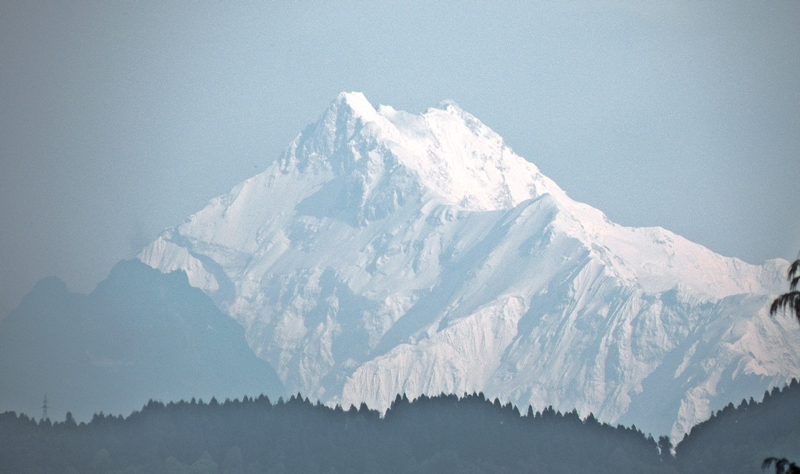
The tiny hill town of Sikkim was in its fabulous mood, when we reached in the bountiful of scenic treasure. Without any struggle, we got our hotel in Rabangla. In eager haste, I removed the curtain of my room to fall in love again for the greatest attraction that brought me away from home. Stupendous peak of Kanchenjunga appeared like resting in the backdrop of the azure and the snow clad mountain peak was gleaming in dazzling golden colour of mid day, reminded me the glaring eyes of Guru Padmasambhav.

The imposing landscape
After lunch, we were on the road, to have a glimpse of the beautiful town and for having a stroll through the ups and downs of the hilly roads. In the market areas of Rabangla, the fierce chillies, shaped like tiny balls or like the shape of volcano were abundantly sold, were said to have medicinal effects and most prolific. The chillies were sold by the local farmers on the footpaths and were costly too. The easy going nature of the small town was very attractive; the beautiful landscapes in a widespread composure, where the nature spread her curtain of shadow over the mountains in the evening. Awhile witnessing the sketches of heavenly landscape in the serenity was worth for a prominent place in the hall of fame of my lifetime experience.

Tiny hill town,Rabangla
On our way to the hotel, I was in search of the souvenirs of Rabangla. Among the hackneyed display of fang-sui articles, I got attracted to the collections of fire balls in the form of pickles. The manager of our hotel loudly laughed at my peculiar possession as a memento.

Sunset at Rabangla
Coming home, it was time to revisit the sweet memories of Rabangla and time to taste the so called sizzling pickle. The fiery pickle made of the hot chillies, when went inside the stomach, in a trice the sizzling taste spread through the nerve cells like a high voltage electric shock or like a pyre, unendingly started burning into the stomach, accompanied by terrific sweating. The unforgettable and unpredictable hot taste of the pickle mixed with the invisible warmth has a feeling like freshly tasted and notwithstanding, invoking the desire to taste again. It resembled the inexplicable beauty of Rabangla, the sweet nest of bower, with green memories of the majestic view of Kanchenjunga gravitate me always.

9 August 2013

secrets of a holiday destination


Kanchanjungha
The unusually beautiful day at Gangtok began with the view of snowy peak of Kanchanjungha. On the other side of the window the dazzling peak of the snow clad mountain was glowing in the dustless morning. After spells of rain it was a stainless view of the entire hill station. The gleams were reflecting even from the foliage like galore of gold were spread all over the greenery. Sometimes it was the layers of drifting mist playing hide and seek and were suddenly hiding everything behind the cover. It was the beginning of a new episode of working day, in the capital city of Sikkim. Away from being a part of it, I was watching in laze, the busy movement of vehicles on the road and moving crowds towards their business and gaiety of holidaying tourists in colourful attire on the road.

Assembly of Sikkim
Soon, I realized it was impossible to get confined in my room and the impetus compelled me to land on the road amidst the crowd of the morning. It was a usual picture of a smooth going day at Gangtok. Reached at the esplanade of Gangtok, known as M.G. Marg or Mahatma Gandhi Marg where an elegant picture of the hill capital could also be noticed. The place had been witnessed, to be persistently filled with well dressed and fashionable men and women. M.G. Marg has been nicely decorated with seasonal flowers, with visible impressions of tidiness and well maintenance, resplendent and discriminating. Vehicles were not allowed in the premises of the M.G. Marg; it was an exclusive property of the pedestrians. The abundant pictures spread in the premises in harlequin of gaiety some were occupied to bask or were in repose to enjoy the scenic beauty, posing for photographs, collecting souvenirs from the shops, some were heading for rope way trip on foot or for a local sightseeing trip of the city. Away from torrid climate it was very pleasing sunny day in the lap of Himalayas and it was ostentation of assured smooth holidaying.

view of Gangtok
Well connected motor-able communication in Sikkim, has added more charm in the experience of superb holidaying which has made easy and quick access of the places, with arduous gradient. The perceptible impressions of relentless endeavor to flourish in the field of tourism and their sincere effort to convey the message of safe holidaying were distinctly reflected in the formidable traffic rules, ban on plastic carry bags, ban on smoking in public places, tidy roads, disciplined people, and also reflect a comprehensible picture of better tomorrow.

7 August 2013

The destination, not too far


The Bay of Bengal at Digha
Decided to stay at the New Digha, having comparatively placid sea shore and perfect for bathing. The splashing sound of the waves roused the impetus to unite ardently with the waves. Abundant pictures of enthusiasm could be noticed in entirety of the beach occupied to bask and to celebrate the high-spirited time. I read somewhere that sea water increases the oxygen level in our blood stream and rejuvenate our body by allowing the sea minerals through the pores of skin and extricate from different physical and mental disorders. Did the enhanced level of oxygen in the body catalysed enthusiasm of the bathing crowd? The bathing and enjoyment were on full swing, in the chirpy sea beach. I wade forward to the waving water to energise my body and to quench the insatiable thirst of sea bathing. Away from the water,kept experiencing the beauty of the sea throughout the day in its different mood till it was slowly an approaching darkness, the gleams of the sun were absorbed in the darkness and we waited for the darkness to be spread all over. The jaunty crowd, started to disappear and slowly the entertainment around the New Digha beach ended for the day.

drifting towards the unknown at Digha
With the darkness, another attraction of Digha was getting ready to incite the passion of the sea lovers. The Bay of Bengal could be discovered at Old Digha with a drastically different mood. The mesmeric beauty of watching sea, from the old Digha had a hypnotic effect at night that phenomenally seized my sole attention and made me standstill. The waves were endlessly appearing from the darkness to burst wildly at the shore and splatter water with smashing sound. It was a kind of natural “light and sound” programme for endless hours. Entire gathering were enjoying the scene like enjoying an endless action packed movie in an open air auditorium or might be we were listening the dialogues of destructive threats of the nature. If the beauty of New Digha was a picture of reposed nature then the beauty of Old Digha was an expression of temerity.

Before leaving the beach, I kept staring at the sea to conceal the imposing beauty of the roaring waves in my heart, the best possession as a souvenir of Digha. The souvenirs of Digha were also available in varied shapes and sizes and could be collected from the shops and stalls. Starting from tiny to big articles made of sea shells, wide varieties of conch and local handicrafts.

3 August 2013

Nature`s Art gallery


After breakfast, as we were leaving behind the busy city of Vishakhapatnam, our SUV began to fly on the wide roads to the Araku valley of Andhra Pradesh. The landscape was getting different and common view of the city of Vizag was replaced by green fields of cultivated lands. The resplendent surrounding was smiling with boundless beauty of bright morning. Soon after, we were through the uphill gradients with the hypnotic view of greenery near and afar with abundant frames of exquisitely beautiful landscapes. An entirely different scenario away of all atmospheric pollution, and the continuous uphill drive made it unbelievable that we were in a place, adjacent to the coast.

The hills with greenery,Aaraku,Andhra Pradesh
Sometimes took a break when we noticed stacks of sugarcane were loaded on the cart and we were offered a lot but, the person smilingly refused to accept money in return, then stopped to enjoy the prepossessing view of natural landscapes and to capture the frames in digital memory, and again stopped to listen to the irresistible call of the silence, which is said to be more vocal than speech. The journey towards Araku was long but, never tiring.

Away of pollution and hastles,Aaraku
Through the hilly terrain, when we reached the Borra caves, it was mid day. Some people were selling the coffee beans to the tourists at the entrance of the cave. This region of the Andhra Pradesh, with the picturesque slopes of hills and valleys are the said to be suitable for growing coffee and though not considered among the big producers of coffee beans worldwide or nationwide, but, it produces considerable amount of organically grown redolent variety of coffee called Arabica.

The entry to the Borra cave,Aaraku
As we entered into the premises of the cave, it was like stepping into another world filled with eternal composure and surrounded by series of hills with unstudied natural beauty. A splash of sweet breeze on our way to the Borra caves overwhelmed my soul with extricated indolence. It was very amazing that stone tools of primitive age have been unearthed from excavations which prove the human existence of several thousand years ago or more in the cave.

the god of the cave,Borra Cave,Aaraku
It was the journey on imagination to explore the shapes or sculptures of animals, human being, god, and many more, formed in the natural treasure of Stalagmites and Stalactites of the Borra caves. The process, when the mineral rich water containing calcium and other elements percolated to the cave, the minerals of the water slowly get deposited on the floor and the roof of the cave to form the columns of stalagmites and stalactites. The nature made expressive sculptures and shapes as we envisage, are formed slowly with time. The stairs took us to the darkest corner of the cave, where it could be seen the stalagmites to be venerated as nature made god Shiva. The trip was an opportunity to witness a unique art gallery with its exhibits kept in the dark and narrow passages of the cave and marvellously created in the work shop of nature.

29 July 2013

The Gwalior fort


It was dark, when we reached the city; the legendary city with a very interesting and colourful past of more than thousand years. The contributions of the glamorous and legendary personalities associated with the place has inspiring and motivating stories and that made me eagerly wait for the next morning.

Gwalior fort
From the Tansen`s tomb, the prepossessing beauty of a mighty fort on a hill top with deep blue frieze, gravitated attention. The landscape of an upright sand stone fort sprawled on a hill against the backdrop of stainless sky was like a coloured page of history. Our car started to ascend and I set my imagination free, to inhale the rich flavour of cultural aroma and feel the invisible inscriptions of history, in its high altitude, in the ambient where the time has suddenly stopped. The stories of love and hatred that left the impression on the fort through the ages, where the kings, poets, singers, saints and patriots enriched the pages of Indian History through their legendary contributions. The history related to the Pratihars, Mughals, Tomars, Britishers, Marathas, the surrounding once reverberated with the magical voice of Tansen, where the evergreen stories of Man Singh and his beloved wife Mrignayani could be felt in the stones, the stories of “Gangajali,” the hidden royal treasury was like a page of Arabian nights, where the frightening darkness in the underground dungeon reminded that, the Mughal prince Murad was executed here and the frightening height from where embattled Rani Laxmi Bai of Jhansi, escaped on a horseback, was none other than the story of the Gwalior fort of Madhya Pradesh.

The dazzling colours of the impressive stone works still remaining on the wall were the symbol of the days of glorious past. The huge area of the fort, with numerous stories of myth, belief, courage, dedication, conspiracy, sacrifice, love were spread in every inch, like varied colours of life yet different and we proceeded behind the stories of the fort guide. The sun was slowly going to set, afar down in the horizon.

In the darkness we were in the premises of the Gwalior fort,waiting for a special programme to begin. It was through the “light and sound,” once again the fort will return to its youthful past and we were waiting to experience the journey of the fort through the ages and witness history in enliven picture.

24 July 2013

INS Kurusura, the War memorial


It was a lovely evening at the Ramakrishna beach, Vizag. I was walking through the beach road towards the submarine museum Kurusura and experiencing the imposingly attractive beauty of Sun set with vanishing silhouettes of the ships in the horizon. Vizag, with its panoramic beauty of wide spread shoreline, has been a prominent port of India with rich maritime history since the age, even before the colonies of foreigners was set up.

The submarine,INS Kurusura
The idea that modified the decommissioned INS Kurusura submarine, into a museum was a commendable offer of witnessing a submarine in reality. The science of warfare being rapidly modernized and the museum gave an opportunity to see the evolution of the scientific principle that added fins to the dream of human being on its way of becoming an underwater predator for the enemies. There are two walls in a submarine, it allows water in the gap between two walls to sink into the water and pump out the water to float.

INS Kurusura
As we entered into the hefty vessel with full of mechanical arrangements, the insufficiently narrow passage of the submarine with comprehensible depictions of underwater life of the mariners, hark back to the days of their underwater missions. It was like watching a compact moving fort of modern time, where the arrangement of beds were provided almost one third of the capacity of the crew members and they had to rest on a rotation basis, no privacy, no scope to communicate with the family members and no extra space to keep fit or for physical exercises. To become a member of this elite force, the sailors have to qualify for prestigious dolphin badge. The submarine with seven compartments could dive with 72-crew members, had slimmest arrangements for kitchen, wash basin, toilets, dining room, radio room etc.

The torpedoes
The Soviet built, diesel and electrically powered submarines could sail under water at a stretch for 3 to 5 days, could travel 16000 nautical miles without refuelling. The submarine served for under water patrolling, could dive 250 metres underwater and even more when needed. With the advancement in the defence research, these specific class submarines are now replaced by technologically more advanced and indigenously developed submarines. Numerous researches have given the battle ship to play a dependable role for their country in battles. Modern scientific research on submarines made it technologically more advanced and fit for the War and Oceanic studies. The submarine of Indian Navy served for the nation commendably for three decades and now as a War memorial gives a virtual feeling of life under the world of oceans.